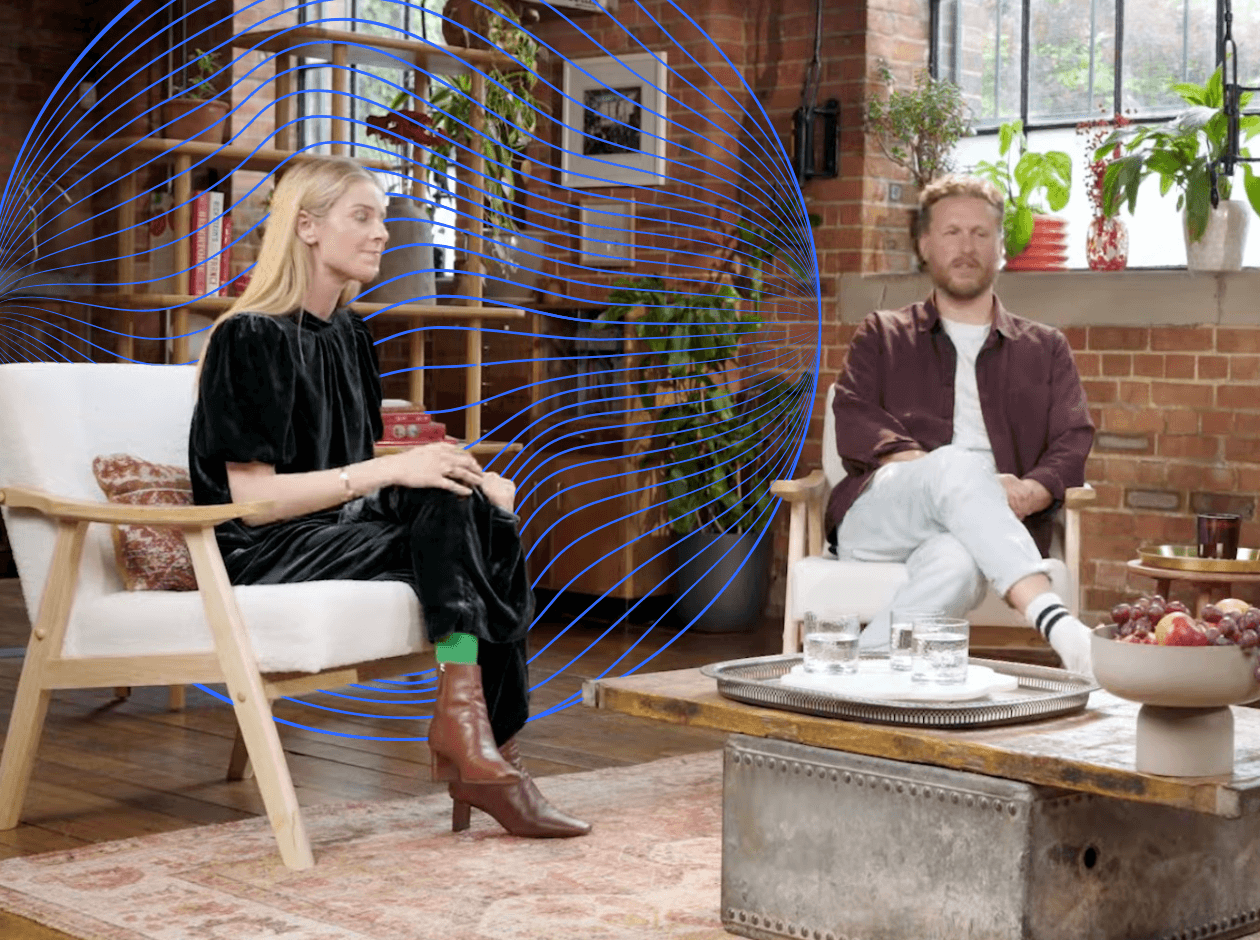
Last week, Radiocentre brought the industry together in Edinburgh and Manchester for its Tuning In North sessions, exploring the evolving role of audio in today’s media landscape. I joined across both locations and spoke on the Manchester panel, where the conversation focused on the challenges shaping investment decisions – from measurement and attribution to how audio earns its place within a modern AV strategy.
Across both sessions, two themes stood out: the power of partnership and the growing body of evidence proving audio’s impact on ROI. What stayed with me most, though, was how rarely we pause to recognise audio’s true value. It raised a bigger question: despite the evidence, are we still making planning decisions more subjectively than we’d care to admit?
Audio’s value problem: evidence vs instinct
One of the most compelling discussions centred on the role of radio partnerships in driving brand KPIs when they’re executed well. These partnerships bring to life something that remains uniquely powerful about audio: the trust and connection between presenters and their audiences. Radio delivers scale, but it also reaches local communities in ways that feel relevant, authentic and human. It’s a brand‑safe environment, and one that creates a genuine feel‑good factor for listeners and advertisers alike.
Trust, context and the power of partnership
Trust and brand safety still don’t feature prominently enough in planning conversations. Audio is consistently one of the most trusted media channels, yet it’s not always front of mind when budgets are allocated. In a landscape increasingly shaped by concerns around algorithms, content adjacency and even mental health, that feels like a missed opportunity. These aren’t secondary benefits of audio – they’re fundamental reasons to invest.
When ROI is scrutinised, audio still over‑delivers
At the same time, ROI has never been under more scrutiny. With businesses under pressure and budgets tightening, every channel is expected to prove its worth.
That’s why the latest Profit Ability data is so striking. Based on the report’s econometric analysis of £1.8bn of media spend across 141 brands and 14 sectors, audio ranks as the third‑highest channel for profit ROI.
And yet, this performance isn’t reflected in the way budgets are distributed. WARC forecasts suggest audio will account for just £750m of a £46.6bn UK advertising market – around 1.6% of total spend – while search and paid social continue to dominate. Even where investment outperforms market averages, the gap between evidence and action remains hard to ignore.
The attribution gap we’re still ignoring
So what’s driving that disconnect? Are we prioritising short‑term, easily attributable results at the expense of channels that deliver broader, longer‑term value? Even when short‑term effects are visible within the first few months, is that really the full picture? Measurement itself can be part of the challenge: robust analysis takes time, investment and patience, and the most meaningful results often emerge well beyond the immediate reporting window.
Radio’s online impact: what the data really shows
This theme came through strongly in Edinburgh, where discussion turned to Radiocentre’s Performance Multiplier Project and radio’s online impact. One digitally native brand shared why it turned to radio to escape what it described as the “traps” of digital‑only thinking – including the assumption that online channels are always more accountable and easier to prove ROI against, particularly at the bottom of the funnel.
In practice, radio enabled the brand to achieve cost‑efficient reach at scale, while offering creative flexibility. Audio also made it possible to test multiple executions at relatively low cost – something that would have required significantly more investment in video.
Always on, rarely celebrated
The takeaway was clear. Radio hasn’t disappeared or diminished – it’s been overlooked while attention has shifted to newer touch points. With the right measurement frameworks and a willingness to look beyond the immediate, its true contribution becomes impossible to ignore. This is evidence that should be front and centre when brands are looking to build higher‑funnel demand that fuels, rather than competes with, lower‑funnel activity.
Video didn’t kill the radio star – radio has always been here. The opportunity now is to start valuing and celebrating its impact accordingly.
Sources:
[1] https://www.radiocentre.org/our-research/high-gain-audio/
[2] https://www.thinkbox.tv/research/thinkbox-research/profit-ability-2-the-new-business-case-for-advertising
[3] https://cdn.builder.io/o/assets%2F1e8574dde0344e78be7badd3d8cbc1bb%2F25db5f9d7a8246e6a674abdc57eef88b
[4] https://www.radiocentre.org/radio-the-performance-multiplier/